Not all industrial corrosion environments are equal. A structural steel beam in a dry warehouse corrodes slowly and predictably. The same steel inside a food processing facility — exposed to organic acids, high-pressure wash-downs, cleaning chemicals, and temperature cycling — corrodes in ways that standard maintenance painting programs are not designed to address.
Food processing plants and wastewater treatment facilities represent two of the most demanding corrosion environments in Michigan’s industrial sector. The work we do in these facilities requires different preparation standards, different coating specifications, and a different level of contamination management than standard structural steel work.
What Makes Food Processing Facilities Different
Organic Acids and Cleaning Chemistry
Food production generates organic acids — lactic acid from dairy operations, citric acid from beverage production, acetic acid from fermentation — that attack metal surfaces directly and degrade standard epoxy and urethane coating systems faster than atmospheric exposure alone.
Combine active acid production with the alkaline cleaning chemicals used for sanitation — caustic soda, chlorinated sanitizers, iodine-based compounds — and you have a surface that cycles between acid and alkali attack through every production and cleaning cycle. Standard maintenance coatings are not formulated to resist this chemistry. They fail prematurely, and when they fail, the exposed metal introduces contamination risk into the production environment.
High-Pressure Wash-Downs
Food processing facilities operate under strict sanitation protocols that require regular high-pressure cleaning of all surfaces — floors, walls, equipment, overhead structure. A coating system that performs adequately under atmospheric conditions may delaminate progressively under daily 1,500–2,000 PSI wash cycles if the coating selection and adhesion quality are not appropriate for the service.
The combination of high-pressure mechanical stress and aggressive cleaning chemistry creates a coating failure mode that is far more rapid and less predictable than standard atmospheric service life would suggest.
Temperature Cycling
Many food processing environments cycle between cold storage temperatures and ambient or elevated process temperatures multiple times per day. Thermal expansion and contraction stresses the coating-substrate bond at a rate that rigid epoxy systems — which are excellent in static temperature environments — can struggle to accommodate. Coating selections for food processing environments often include more flexible formulations or modified epoxy systems designed to tolerate thermal cycling.
FDA and USDA Compliance Requirements
Interior surfaces in direct contact or in proximity to food product must meet FDA and USDA requirements for coating materials. Not every high-performance industrial coating is appropriate for food-contact or food-adjacent use. Coating specification for food processing environments must account for regulatory compliance, not only corrosion performance.
What We Have Seen in Michigan Food Processing Facilities
Our work blasting and relining a large FDA-grade storage silo in Michigan is a direct example of what corrosion remediation in a regulated food environment looks like. The interior lining had failed, active corrosion was present on the vessel walls, and the work — confined space blasting, lining application, and regulatory documentation — required a level of planning and contamination management that is substantially more involved than open-air industrial blasting.
The assets most commonly requiring corrosion remediation in Michigan food processing facilities include:
- Storage silos and bins — interior linings in grain, powder, and liquid storage vessels are subject to product abrasion, moisture, and in some cases microbial activity
- Processing equipment frames and structural steel — exposed to daily wash-downs and production chemistry
- Floor and containment structures — subject to chemical splash, vehicle traffic, and thermal cycling
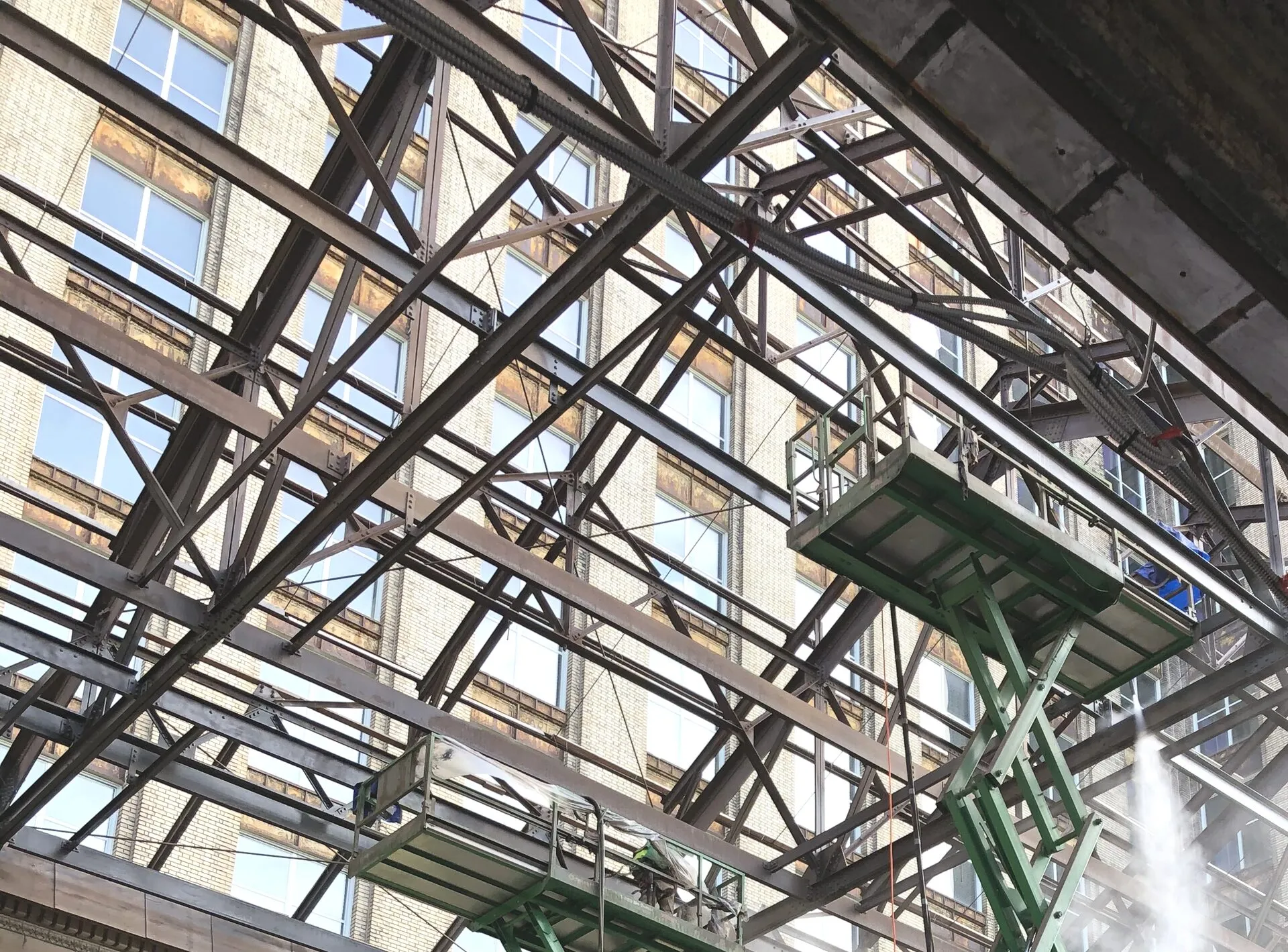
- Overhead structure — often neglected because it is difficult to access, but condensation and steam exposure produce significant corrosion over time
- Tank and vessel exteriors — refrigerated vessels develop condensation on exterior surfaces that drives corrosion at coating failures
What Makes Wastewater Treatment Facilities Different
Hydrogen Sulfide: The Primary Threat
In wastewater treatment environments, hydrogen sulfide (H₂S) is the dominant corrosion driver. Produced by sulfate-reducing bacteria in anaerobic conditions — the conditions that exist in collection systems, wet wells, primary treatment basins, and sludge handling areas — H₂S dissolves in condensation on concrete and metal surfaces to form sulfuric acid.
The mechanism is well understood: biological H₂S in the gas phase condenses on surfaces, sulfur-oxidizing bacteria convert it to sulfuric acid, and the acid attacks both concrete and metal surfaces with significantly more aggression than standard atmospheric corrosion. In severe wastewater environments, unprotected concrete and steel surfaces can lose measurable thickness in two to three years.
Submerged Service Conditions
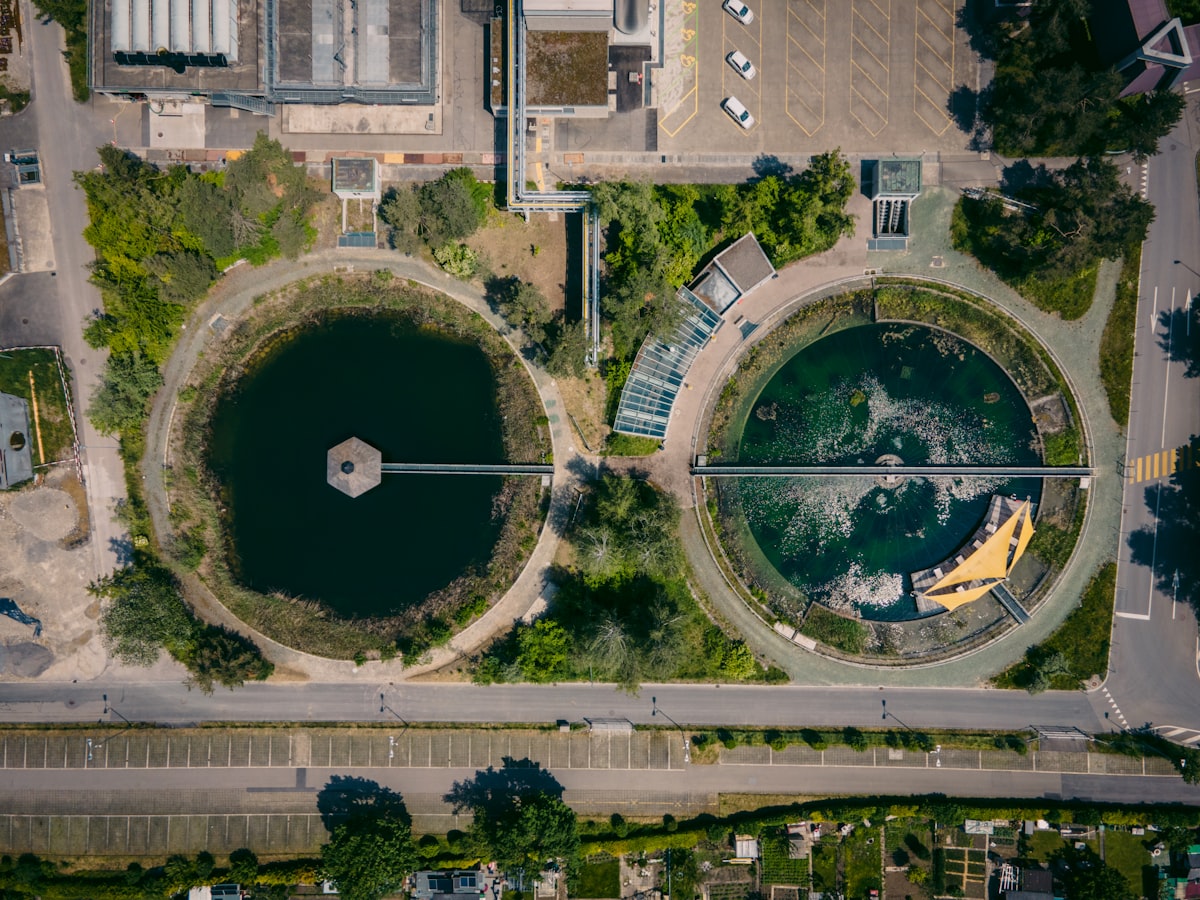
Treatment basins, clarifiers, and collection infrastructure expose metal and concrete surfaces to continuous or intermittent immersion in a biologically active, chemically aggressive medium. Coating systems for submerged wastewater service must provide complete barrier protection — any pinhole, holiday, or adhesion failure in an immersion lining quickly becomes an active corrosion site as the electrolyte reaches the substrate.
Standard atmospheric coating systems are not appropriate for immersion service. High-solid epoxy linings, coal tar epoxy, and in aggressive environments, epoxy novolac systems are the standard specifications for submerged wastewater surfaces.
Splash Zone Challenges
In treatment facilities, the splash zone — the area at and just above the waterline — is often the most aggressively corroded area of any structure. It combines intermittent wetting and drying (which drives chloride and salt concentration at the surface), biological activity, and H₂S exposure from the air space above. Coating selection and application thickness at the splash zone require specific attention in any wastewater coating project.
Access and Confined Space Requirements
Most wastewater treatment structures requiring interior coating work are confined spaces under OSHA 29 CFR 1910.146. Entry requires a permit, atmospheric monitoring, ventilation, standby personnel, and rescue provisions. Our crews are trained and equipped for confined space entry. Managing confined space work is a standard part of how we plan and execute wastewater blasting and coating projects — not an exception.
The Right Preparation Standard for These Environments
Standard commercial blast cleaning — SSPC SP-6 Commercial Blast — is the minimum acceptable preparation for most exterior industrial work. In food processing and wastewater environments, it is frequently not sufficient.
For food processing interior surfaces: SSPC SP-10 Near-White Blast Cleaning is the minimum appropriate standard for interior vessel linings and immersion surfaces. The anchor profile, cleanliness level, and absence of surface contamination required by high-performance lining systems cannot be reliably achieved at SP-6.
For wastewater immersion service: SSPC SP-10 to SP-5 (White Metal) is commonly specified by coating manufacturers for immersion linings in municipal and industrial wastewater service. In environments where soluble salt contamination (chlorides, sulfates) is present — common in wastewater infrastructure — additional surface washing or chemical treatment to reduce soluble salt levels to below 3–5 µg/cm² may be required before coating.
For food processing equipment adjacent to product: Surface cleanliness must meet both SSPC preparation standards and applicable food safety regulatory requirements for coating materials. Coordination between the coating specification and the facility’s food safety protocols is part of the project planning process.
Working With Blasting Jack on Regulated Environments
We have direct experience in both food processing and wastewater environments in Michigan. We understand what FDA-grade silo relining requires. We hold the confined space training and equipment required for wastewater basin and wet well work. We work with coating manufacturers to specify lining systems appropriate to the specific chemical exposure and service requirements of each application.
If your facility operates in either of these environments and you are dealing with failing linings, active corrosion, or upcoming maintenance requirements, we would rather have a conversation before the scope becomes an emergency.
Contact Blasting Jack to discuss your facility’s corrosion situation and what the right approach looks like.