Services
Industrial Coating Removal in Michigan
Strip failed coatings down to bare metal. Start the recoat cycle right.
Services
Strip failed coatings down to bare metal. Start the recoat cycle right.
The most common cause of premature coating failure is inadequate surface preparation on the previous application. When a coating peels, blisters, or delaminating, it means the adhesion bond between the coating and the substrate has broken down. Painting over a failed coating doesn't restore that bond — it adds another layer that will fail the same way, usually faster.
Proper coating removal gets you back to a known starting point — clean, profiled steel, concrete, or masonry — so the new coating system can be applied correctly and perform as specified.
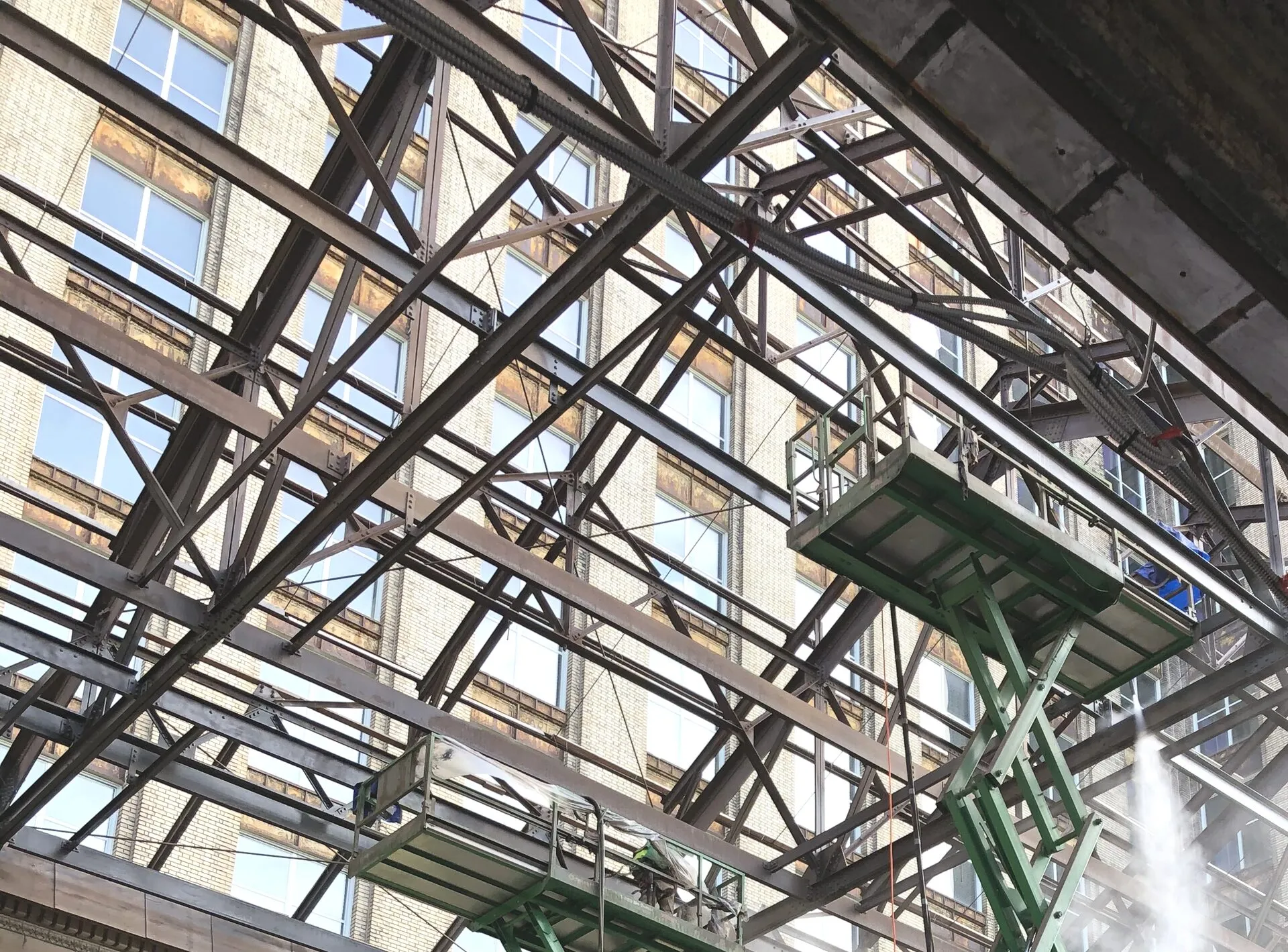
Blasting Jack removes failed coatings using abrasive blasting, ultra-high-pressure water blasting (up to 40,000 PSI), or a combination of both depending on the surface and the project requirements.
The standard method for industrial coating removal on steel. Removes coating, rust, and mill scale simultaneously while creating the anchor profile required for the new coating system. Achieves SSPC SP-6, SP-10, or SP-5.
Ultra-high-pressure water removes failed coatings from steel and concrete without generating abrasive media waste. Preserves existing anchor profile. Meets WJ-1 through WJ-4 SSPC water jetting standards. No dust generation.
For coating removal in occupied facilities or on historic surfaces where dust control is critical. Water-abrasive slurry removes coatings with 92%+ less airborne dust than dry blasting.
Older industrial coatings may contain lead, chromates, or other regulated materials. Coating removal on these surfaces requires appropriate containment to prevent airborne particles and debris from migrating beyond the work area, and proper waste handling protocols.
Blasting Jack plans containment as part of every coating removal project. If you know or suspect the existing coating contains regulated materials, tell us upfront — that affects how we set up, what PPE is used, and how waste is handled.
After coating removal, the surface should be inspected and coated as quickly as the spec allows. Steel surfaces are vulnerable to flash rust once the old coating is off, especially in Michigan's humid environment.
Through our sister brand Endurance Painting, we can coordinate blasting and industrial coating application under one project plan. The prep-to-coat transition is handled without gaps in schedule or accountability.
It depends on the coating system spec and the condition of the existing coating. If the existing coating is tightly adhered and in good condition, some systems allow overcoating. If there's delamination, peeling, or active rust underneath, removal is required. The coating manufacturer's product data sheet specifies what's acceptable.
We can remove coatings with appropriate containment measures. We don't perform lead abatement certification or disposal — we contain blast debris properly and work with the project's environmental requirements. If lead abatement certification is required by the project, tell us upfront.
Abrasive blasting removes the coating and simultaneously creates a new anchor profile. UHP water blasting removes the coating without changing the existing profile — useful when the base metal profile is already correct and you just need the failed coating stripped. Water blasting also generates no abrasive waste.
As quickly as possible — within hours in humid conditions. Bare steel begins to oxidize (flash rust) immediately after blasting, especially in Michigan's summer humidity. We work with coating crews to minimize the window between blast and primer.