Services
Brick and Masonry Blasting in Michigan
Restore brick and masonry without damaging the original material — media selection is everything.
Services
Restore brick and masonry without damaging the original material — media selection is everything.
Brick, stone, and masonry are more fragile than steel. The wrong abrasive media — too hard, too angular, or at too high a pressure — erodes the face of the brick, damages the mortar joints, and can permanently alter the appearance of historic surfaces. Getting it back is expensive or impossible.
Blasting Jack selects media and blast parameters for each brick and masonry project based on the surface type, the contaminant being removed, and whether the surface is historic or modern. Softer media (crushed glass, corn cob, baking soda, or low-pressure glass bead) removes paint and biological growth without cutting into the brick face or mortar.
Vapor blasting (dustless blasting) is often the preferred method for brick and masonry — the water-abrasive slurry is gentler on porous surfaces and suppresses dust from disturbed paint and biological growth.
Historic brick buildings in Michigan — industrial plants, train stations, commercial buildings, and residential structures built before 1950 — often have softer, more porous brick than modern manufactured brick. They require lower blast pressures, finer media, and more conservative technique to clean without causing damage.
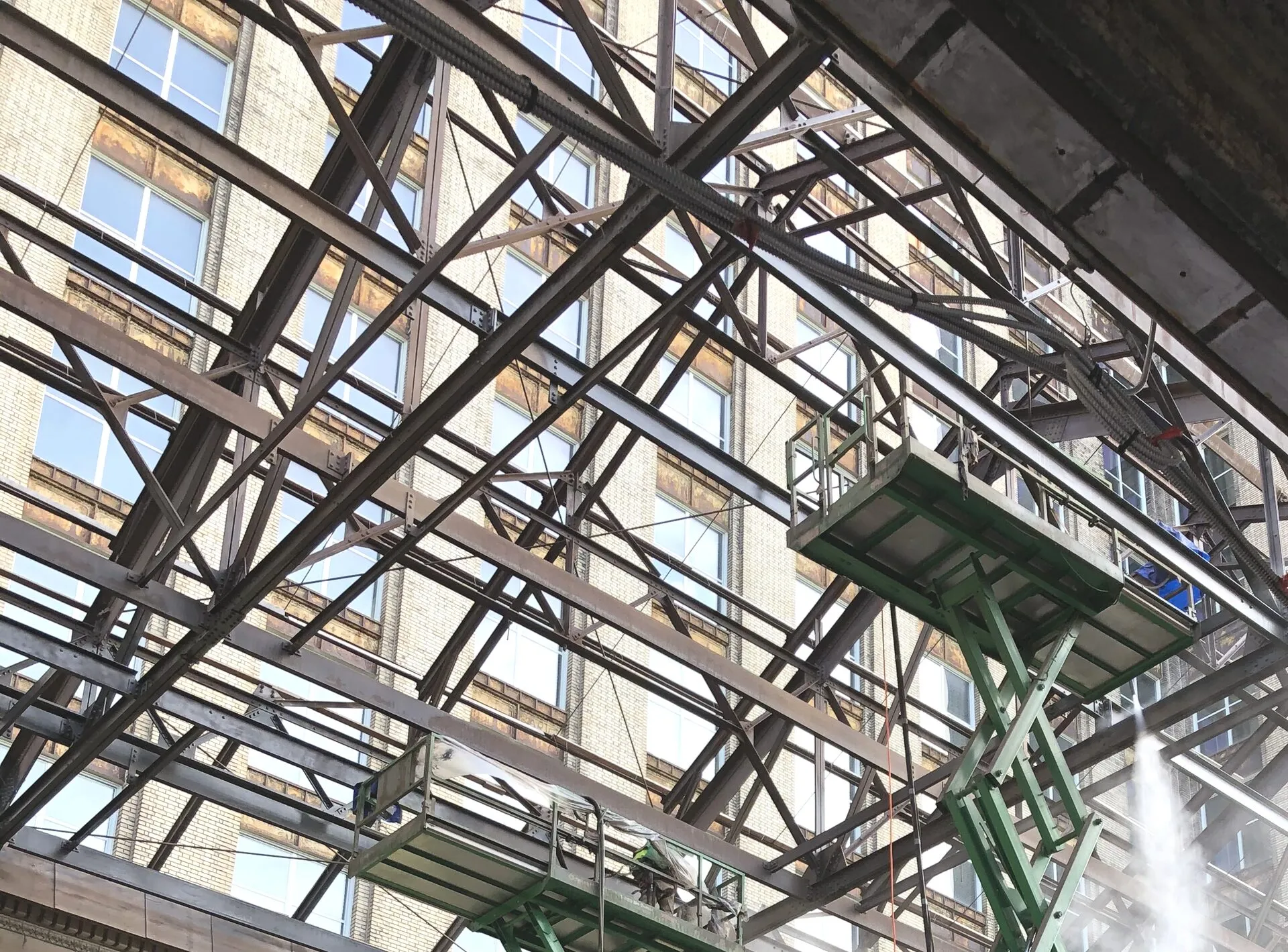
Blasting Jack has worked on historic restoration projects in Michigan, including the Michigan Central Train Station waiting room restoration. For architecturally significant surfaces, we evaluate the brick and mortar before selecting media and test a small inconspicuous area before proceeding with the full scope.
If a project is on the National Register or subject to historic preservation guidelines, additional restrictions may apply — we recommend reviewing those requirements before any surface work begins.
Paint removed from brick surfaces — especially older paint — may contain lead. Appropriate containment is required to capture debris and prevent migration to surrounding areas, pedestrians, or adjacent property.
For urban or occupied building sites, blast containment is set up to capture media and removed material. Vapor blasting reduces airborne dust, making it easier to manage the debris generated during paint and coating removal from masonry.
Blasted brick and masonry surfaces are typically left clean and ready for the next phase of work — whether that's tuck pointing, sealing, painting, or simply restored to natural appearance.
If the project involves painting or coating the brick after blasting, we can coordinate with painting contractors on timing and surface condition.
Most modern brick can handle abrasive blasting with appropriate media and pressure. Very soft or highly porous historic brick, especially in structures pre-dating 1900, may be too fragile for abrasive blasting and may require chemical cleaning or very gentle wet methods instead. We evaluate each surface before committing to a method.
It can, if the wrong media or pressure is used. Proper brick blasting uses soft, fine-grit media at controlled pressure, directed at the brick face rather than directly into mortar joints. An experienced operator adjusts technique to preserve mortar.
Vapor blasting (dustless blasting) is often the best approach — it's gentler on porous surfaces, reduces dust, and provides good control over blast intensity. For very stubborn coatings or large areas, dry blasting with soft media may be more efficient.
Yes. Graffiti removal from brick using low-pressure wet blasting or vapor blasting is effective on most graffiti paints. The result depends on how deeply the graffiti paint has penetrated the brick face. Older graffiti or porous brick may retain some staining after removal.