Services
Rust Removal Blasting for Industrial Surfaces
Michigan's environment is hard on steel. Abrasive blasting is the only fix that lasts.
Services
Michigan's environment is hard on steel. Abrasive blasting is the only fix that lasts.
Michigan's industrial environment is among the most corrosive in the country. Road salt used from November through March is highly aggressive to unprotected or poorly protected steel. Freeze-thaw cycles cause coatings to crack and delaminate. Year-round humidity, near the Great Lakes, accelerates oxidation on any exposed steel surface.
Wire brushing, grinding, and rust converters all treat rust at the surface level. They don't remove the oxidation from the pits and valleys of corroded steel, and they don't create the anchor profile a coating needs to bond permanently. The rust comes back — usually within one to two years.
Abrasive blasting removes rust completely — from the surface and from the pits — and simultaneously creates the anchor profile that industrial coatings require. It's the only preparation method that produces a permanent fix when paired with the right coating system.
Removes surface rust only. Rust in pits and texture remains. No anchor profile created. Coating will fail at remaining rust cells.
Chemically treats rust but doesn't remove it. Conversion is incomplete in deeper corrosion. Creates an unstable base for industrial coatings.
Minimum prep for very light surface rust. Insufficient for assets that require industrial coating systems or that face aggressive environments.
Removes loose rust and scale. Leaves tightly bonded rust in place. Not acceptable for high-performance coating systems.
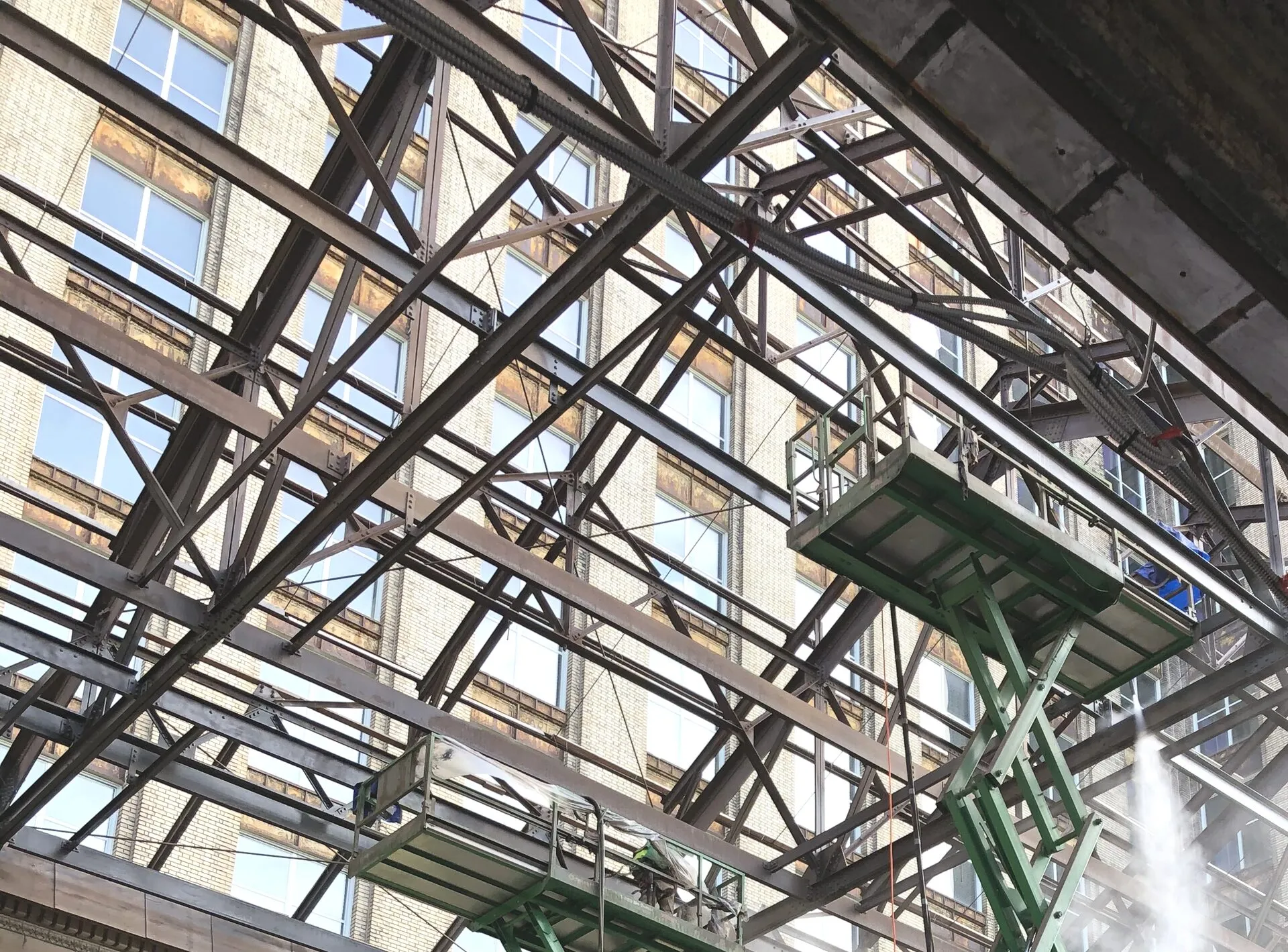
Beams, columns, connections, and embedded plates in parking structures, bridges, and industrial buildings. Rust at structural connections is a safety issue, not just a cosmetic one.
Manufacturing equipment, trailers, material handling systems, and plant machinery corroded by industrial environments and exposure to the elements.
Above-ground storage tanks, wastewater tanks, and industrial vessels where rust on interior or exterior surfaces compromises structural integrity and coating adhesion.
Light poles, utility structures, guard rails, and municipal infrastructure that require rust removal and recoating on a maintenance schedule.
Steel seawalls, sheet piling, and marine structures exposed to water and salt that require aggressive rust removal and protective coating.
Flatbed trailers, tankers, and fleet vehicles corroded by road salt — blasted and recoated to extend service life.
The SSPC (Society for Protective Coatings) defines cleanliness standards for steel surface preparation. Rust removal to SP-10 (near-white) or SP-5 (white metal) is typically required for high-performance industrial coatings and immersion service.
The required standard depends on the coating system being applied. Blasting Jack works to the spec required — we confirm the SSPC level with you before the job starts, not after.
Blasted steel is vulnerable to flash rust within hours, especially in humid conditions. Primer should follow blasting as quickly as the project allows. The window between blast and coat is a critical scheduling constraint.
Through our sister brand Endurance Painting, we can coordinate industrial surface prep and coating application under one project plan with no gap in accountability.
The deciding factor is the coating system being applied and the severity of corrosion. Most industrial coating systems — any epoxy, urethane, or high-build coating — require abrasive blasting to a minimum of SSPC SP-6 for the coating to perform as specified. If there's active rust, pitting, or delaminated coating, blasting is required.
Yes — this is what mobile blasting is designed for. We come to the site, set up containment, and blast the structure in place. We work on installed structural steel, tanks, parking structures, seawalls, and other large fixed assets regularly.
Coating life depends on the system selected, the environment, and the maintenance program. A properly blasted and coated industrial steel surface in a typical Michigan environment can be expected to perform 10–20+ years with the right system. Proper prep is the primary variable in coating longevity.
It depends on the location and scope. Outdoor blasting near waterways, or blasting in certain municipalities, may require permits. If the coating being removed contains regulated materials (lead, chromates), waste handling requirements apply. We'll identify permit requirements during project planning.