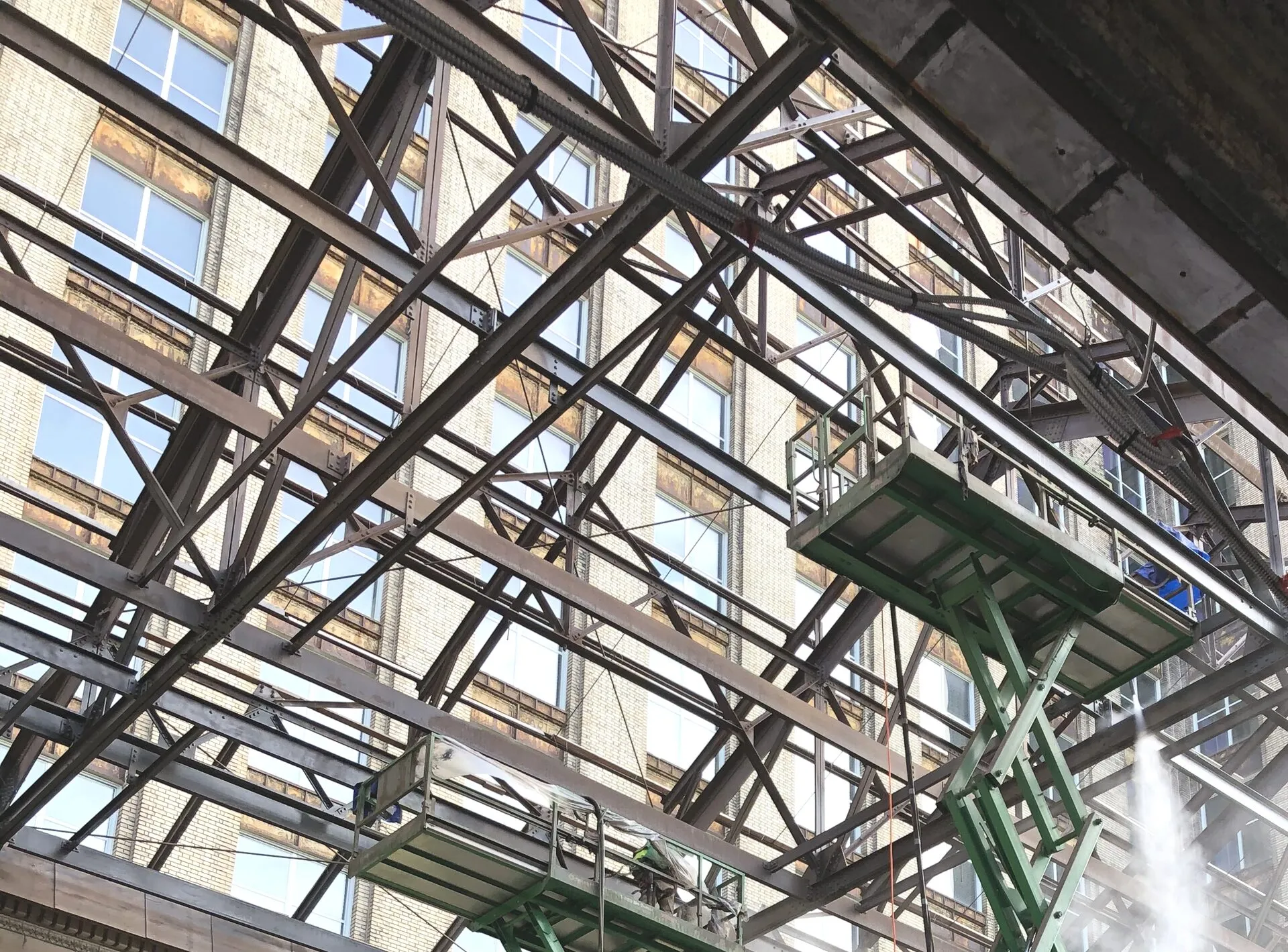
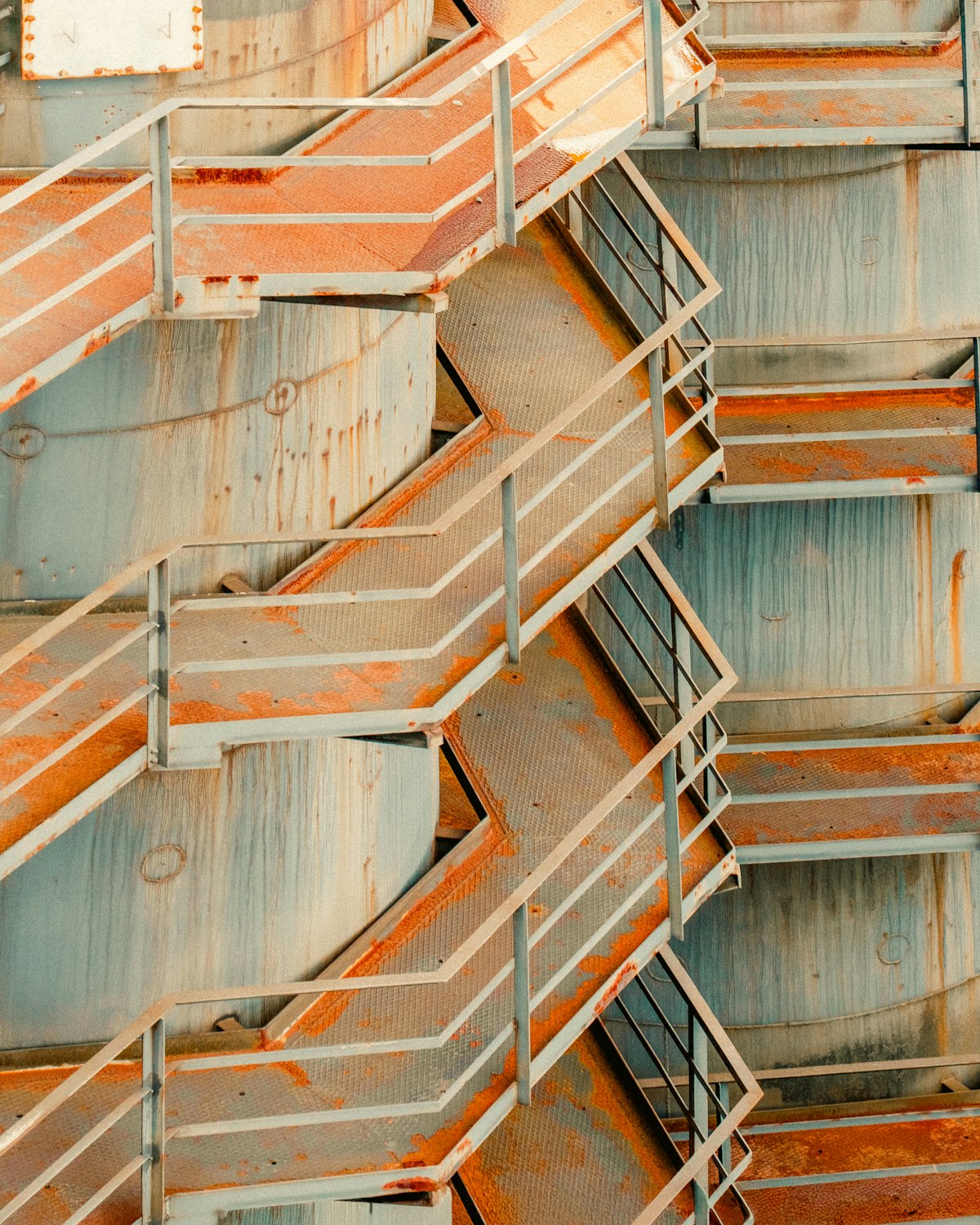
Every facility manager has been in the same position: the maintenance budget is tight, the coating system on the structural steel or tank farm is showing early signs of deterioration, and the question comes up — can we push it another year?
Sometimes the answer is yes. Often, it is not. And the difference between those two situations — and what happens when the wrong call is made — is the subject of this article.
How Corrosion Costs Are Structured
Corrosion costs on industrial assets follow a pattern that is well-documented in asset management literature and in the practical experience of anyone who has managed industrial facilities for more than a decade.
Early-stage intervention is cheap. A coating system that is showing early chalking, gloss loss, or isolated spot failures can often be addressed with maintenance painting — spot priming deteriorated areas and applying a full topcoat — for a fraction of the cost of a full recoat. The surface preparation is minimal, the scope is targeted, and the existing coating system still has life in it.
Mid-stage intervention is moderate. Once the coating system has failed broadly — widespread delamination, extensive rust staining, active corrosion on large sections of the substrate — the work scope expands significantly. Full surface blasting is now required. More coating material is needed. Containment requirements for blast media and lead or chromate-containing old coating may apply. The scope has doubled or tripled compared to early-stage maintenance.
Late-stage intervention is expensive, and sometimes catastrophic. When corrosion has been allowed to progress to significant pitting, section loss, or structural compromise, you are no longer dealing with a coating project. You may be dealing with structural steel replacement, pressure vessel repair, regulatory citations for equipment in an unsafe condition, or emergency shutdown of a process that cannot operate safely with the compromised equipment. The cost at this stage is measured in a completely different order of magnitude.
The Compound Effect of Deferred Maintenance
The insidious thing about corrosion is that it does not progress linearly. Once a coating system begins failing and bare metal is exposed, the rate of attack accelerates.
Why deferral compounds the problem:
-
Active corrosion removes metal permanently. Unlike a cracked floor coating or a worn mechanical component, corrosion does not simply wait for attention. Every month that passes after coating failure, the metal itself is being consumed. Section loss is irreversible.
-
Corrosion undermines adjacent sound coating. Once rust establishes under a coating film at a failure point, it migrates laterally beneath the film through a process called undercutting. What begins as a square foot of active corrosion can undermine and delaminate three to five times that area before it becomes visually obvious.
-
Contamination increases surface preparation requirements. Soluble corrosion salts — ferrous chlorides, sulfates — accumulate in pits and under delaminating coating. These salts must be removed before new coating is applied, or they will drive osmotic blistering under the new coating within one to two years. When corrosion has been left long enough for salts to accumulate, the surface preparation standard and scope required for proper remediation increases substantially.
-
Structural assessments may now be required. Once pitting or section loss is detected on structural or pressure-containing components, engineering assessment of remaining wall thickness and structural capacity may be required before work proceeds — and before operations can safely continue. This adds professional engineering cost and scheduling complexity that is entirely absent from routine maintenance projects.
What Deferred Maintenance Actually Costs: A Framework
There is no universal number because the variables are too facility-specific, but the structural relationship holds across asset types:
| Intervention Stage | Surface Prep Required | Relative Cost Multiplier |
|---|---|---|
| Early maintenance (coating sound, isolated failures) | Spot blast / hand tool clean | 1× |
| Mid-cycle (widespread coating failure, surface rust) | Full blast to SSPC SP-6 | 2.5–4× |
| Late stage (heavy corrosion, pitting, section loss) | Full blast to SP-10 or SP-5 + structural assessment | 5–10× or more |
| Emergency / failure (structural compromise, regulatory) | Varies — may include steel replacement | Indeterminate |
The multipliers above refer to the cost of the coating work itself. They do not include lost production time from emergency shutdowns, regulatory penalties, insurance implications, or the replacement cost of equipment that is beyond remediation.
The Specific Risk: Michigan’s Environment Accelerates the Timeline
Facilities in Michigan’s industrial corridor face environmental conditions that compress the timeline between early-stage deterioration and serious structural compromise:
- Road salt — chloride-rich runoff and airborne salt from Michigan’s winter road treatment program is one of the most aggressive corrosion accelerants for carbon steel. Facilities near highways, in urban industrial zones, or operating outdoor equipment face elevated chloride exposure year-round.
- Freeze-thaw cycling — water that infiltrates a failing coating system expands and contracts through Michigan’s multiple freeze-thaw cycles each winter, mechanically delaminating coating from the substrate and accelerating moisture access to the steel.
- High humidity seasons — Michigan’s spring and fall humidity, particularly near the Great Lakes, drives condensation on steel surfaces and maintains the wet conditions that sustain active corrosion even on surfaces that appear dry.
Under Michigan conditions, a coating system that might last five to seven years in a dry climate may require intervention at three to four years. Facilities that plan maintenance cycles based on generic service life estimates without accounting for local conditions consistently find themselves behind the corrosion curve.
Signals That Deferred Maintenance Has Gone Too Far
If you are evaluating the current state of a facility asset, these are the indicators that suggest the window for cost-effective maintenance painting has closed and a full remediation scope is now required:
- Rust staining visible on the outer face of a topcoat — the corrosion is migrating through the coating system, not merely at surface failures
- Coating that sounds hollow when tapped — delamination between the coating and substrate has progressed; the coating is no longer protecting the steel beneath
- Active blistering or bubbling on horizontal or low-slope surfaces — moisture is trapped beneath the coating and driving osmotic pressure from below
- Visible pitting on bare metal at failure points — uniform oxidation has progressed to localized attack; section loss has begun
- White or powdery deposits at corrosion sites — soluble corrosion salts have formed; additional surface preparation will be required
Any of these conditions indicates that standard maintenance painting is no longer appropriate and a full blast-and-recoat scope should be scoped and budgeted immediately — before the condition deteriorates further.
What a Proactive Maintenance Cycle Looks Like
The most cost-effective long-term approach to industrial corrosion is a planned maintenance program, not a reactive one. In practice, this means:
- Annual visual inspection with documentation of coating condition across all critical assets — structures, tanks, equipment, rooftop and exterior steel
- Surface preparation and maintenance painting at the first signs of widespread deterioration — before active rust has developed on bare metal
- Full system assessment at the 40–50% service life mark of the original coating system — typically five to eight years for an exterior industrial system — to determine whether maintenance painting or full recoat is the appropriate next step
- Budget provisioning in advance — the most expensive corrosion remediation projects are always emergency projects. Facilities that plan and budget for corrosion maintenance on a five-year rolling cycle pay significantly less per square foot over time than facilities that respond only to visible failures.
Working With Blasting Jack
We are a mobile blasting contractor, not a coating manufacturer with a product to sell. When we assess a facility asset, we tell you what the surface condition actually requires — not what generates the largest project scope.
Some assets need a full blast and recoat. Some need targeted maintenance blasting and spot prime. Some can be addressed with a sweep blast and overcoat at a fraction of full project cost. We scope work based on what the condition requires.
Contact Blasting Jack to schedule a no-cost facility assessment and get a straight answer on where your assets stand and what the appropriate intervention looks like.