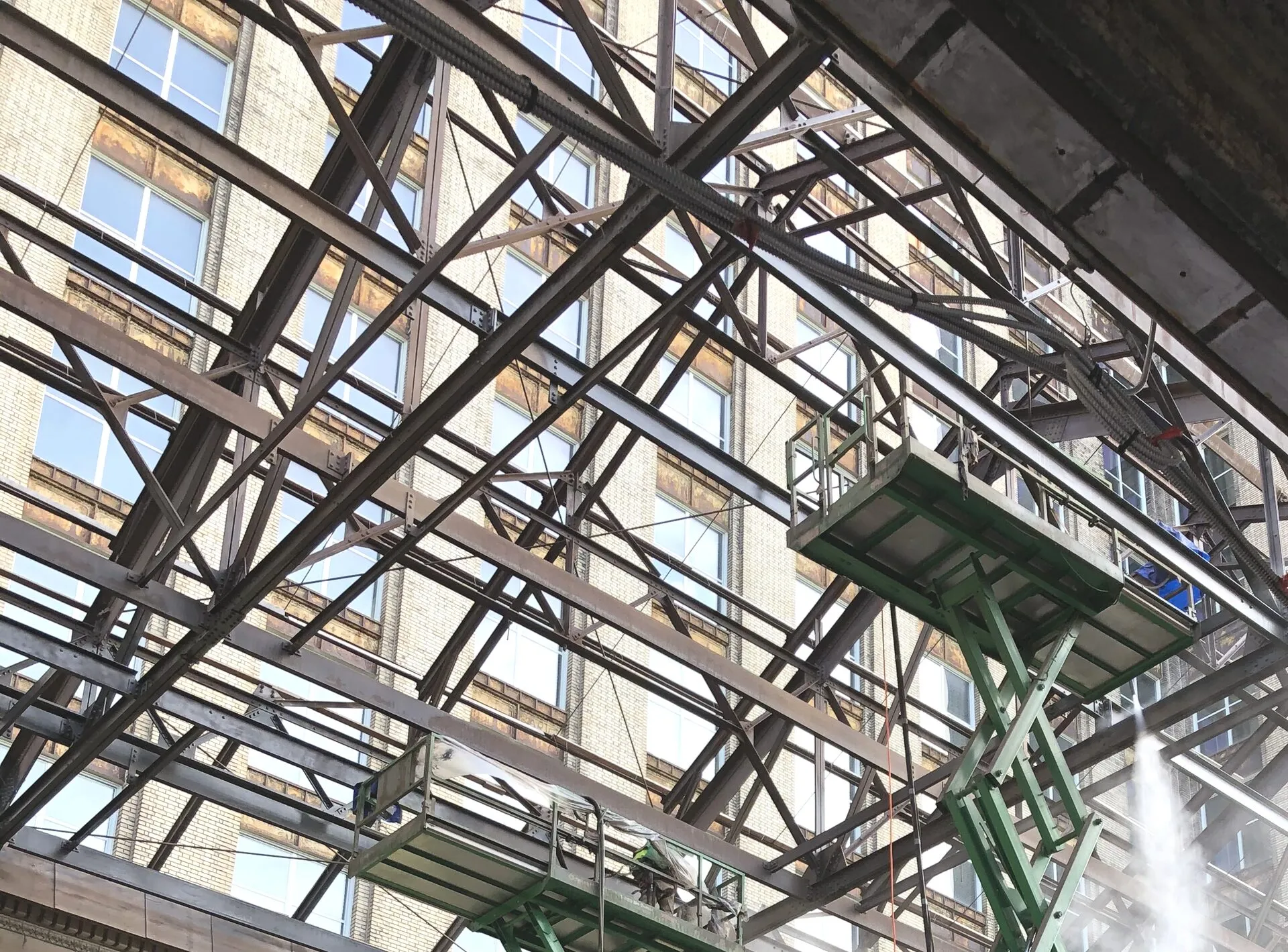
Industrial sandblasting carries real hazards — silica dust, confined spaces, high-pressure equipment, fall exposure, and chemical hazards from coatings being removed. The difference between a crew that manages those hazards and one that doesn’t comes down to training and the culture behind it.
Blasting Jack crews are trained to OSHA 10, OSHA 30, and confined space entry standards. Here is what that means in practice.
OSHA 10 and OSHA 30
The OSHA Outreach Training Program issues 10-hour and 30-hour certifications through authorized trainers under OSHA’s construction and general industry tracks.
OSHA 10 is the baseline. It covers hazard recognition, fall protection, electrical safety, struck-by and caught-between hazards, personal protective equipment, and the rights and responsibilities of workers under OSHA. Every crew member holds this certification.
OSHA 30 goes deeper. It is designed for supervisors and site leads and covers the same hazard categories in greater detail, adds management of safety programs, incident investigation, recordkeeping requirements, and regulatory compliance. Blasting Jack’s site supervisors hold OSHA 30.
What this training produces on a job site:
- Crews that recognize hazards before they become incidents
- Supervisors who can run a job site safety plan and communicate it clearly
- Workers who know their rights and responsibilities under OSHA standards
- Documentation that holds up if a project is inspected or if an incident occurs
For general contractors and facility owners who require OSHA certification from subcontractors before site access, Blasting Jack meets that requirement.
Confined Space Entry
Sandblasting inside tanks, vessels, silos, vaults, utility structures, and similar enclosures is confined space work. OSHA 29 CFR 1910.146 (general industry) and 29 CFR 1926.1200 (construction) regulate permit-required confined space entry — and they are detailed, specific, and strictly enforced.
A permit-required confined space is one that contains or has the potential to contain a serious hazard. For sandblasting operations that typically means:
- Atmospheric hazards — oxygen deficiency or enrichment, toxic air contaminants including silica dust and vapors from surface coatings being removed
- Engulfment hazards — abrasive media accumulation inside the space
- Physical hazards — limited egress, equipment access constraints, communication difficulties
Confined space entry training covers the full permit process: atmospheric testing and monitoring, ventilation requirements, attendant and entrant roles, rescue procedures, and the conditions that require aborting entry. It is not a general safety course — it is specific to the confined entry scenario and the hazards present in that space on that job.
Working inside a tank or vessel with blasting equipment running without a trained, certified crew is a documented pathway to fatalities. OSHA’s confined space standards exist because workers die in permit spaces every year, most often due to atmospheric hazards that were not identified or monitored.
Why This Matters to Clients
Liability. A subcontractor who does not hold current OSHA certifications creates liability exposure for the general contractor and the facility owner. If an incident occurs on site, training records are one of the first things examined.
Site access. Most large industrial facilities, refineries, municipalities, and general contractors require documented OSHA certification before a subcontractor sets foot on site. Having trained crews means the project doesn’t stop at the gate.
Insurance. Contractors with documented safety training carry better loss history. That affects pricing and availability of coverage across the project.
Work quality. Crews trained to recognize hazards work more methodically. A blast job inside a tank done correctly — with atmospheric monitoring, proper ventilation, a designated attendant, and a rescue plan in place — is also done more thoroughly and with less rework than one running without those controls.
Applicable OSHA Standards for Industrial Blasting
| Standard | Scope |
|---|---|
| 29 CFR 1910.94 | Abrasive blasting — ventilation, respiratory protection, operator requirements |
| 29 CFR 1910.1053 | Crystalline silica — exposure limits, controls, medical surveillance |
| 29 CFR 1910.146 | Permit-required confined space (general industry) |
| 29 CFR 1926.1200 | Permit-required confined space (construction) |
| 29 CFR 1910.134 | Respiratory protection program requirements |
Compliance with these standards is not optional. They apply regardless of project size, and OSHA enforcement in Michigan is active in the industrial sector.
Blasting Jack operates throughout Michigan on industrial, commercial, and infrastructure projects. Our crews arrive with current OSHA 10, OSHA 30, and confined space certifications. Contact us to discuss your project requirements.